
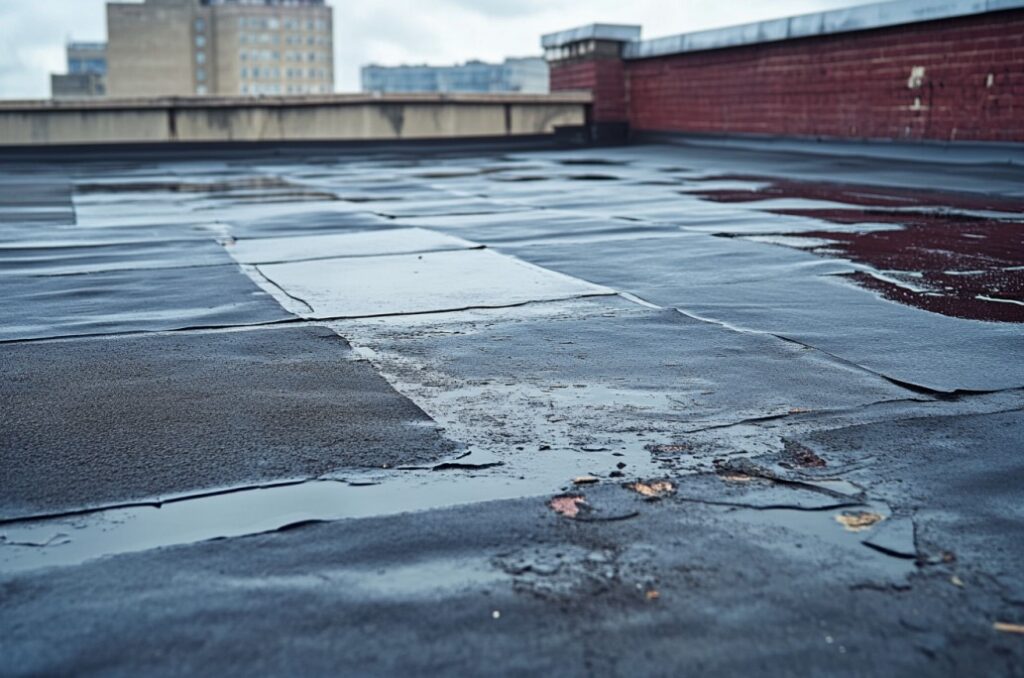
After a heavy rain in Huntsville, it is common to see standing water on a roof long after the storm has passed. On many commercial buildings with flat roof systems, that water may look temporary. In reality, it often signals deeper issues.
Poor commercial roof drainage is one of the most direct and preventable causes of reduced roof lifespan. When water does not move off a flat roof properly, it adds weight, increases stress on materials, and accelerates deterioration in ways that are not always visible at first.
In this guide, we will explain:
- How commercial roof drainage is designed to protect roof life
- Why standing water on a roof speeds up aging
- The most common flat roof problems tied to poor drainage
- Early warning signs that lifespan loss is already occurring
- Practical solutions that help restore and protect long-term performance
If your building is experiencing drainage concerns, Agape Roofing can help evaluate the situation before minor issues become major repairs.
Why Commercial Roof Drainage Directly Impacts Roof Life in Huntsville
Commercial roof drainage is not simply about getting water off the surface. In commercial roofing, it is about preserving the expected service life of the entire roofing system.
A flat roof is never truly flat. It is built with a slight slope that directs water toward drains, scuppers, or downspouts. When that slope is insufficient, or when drains become clogged, standing water on a roof becomes routine instead of temporary.
In Huntsville, strong rain events and wind-driven debris make drainage systems work harder. When water remains on the roof longer than 24 to 48 hours, the roof begins aging faster than designed.
Manufacturers design most commercial systems assuming positive drainage. When commercial roof drainage fails, several things happen at once:
- Membranes stay under prolonged hydrostatic pressure
- Structural deflection increases
- Insulation becomes vulnerable to moisture intrusion
- Heat buildup intensifies beneath pooled water
Over time, these factors shorten roof life significantly.
Drainage failure is not just a maintenance issue. It is a lifespan issue.
How Poor Drainage Physically Shortens the Life of a Flat Roof
To understand how drainage affects longevity, it helps to look at the mechanics.
A properly maintained flat roof may last 20 to 30 years, depending on the system. Chronic ponding can reduce that service life by years because the roof is exposed to constant stress.
Added Weight Leads to Structural Deflection
One inch of standing water on a roof weighs more than five pounds per square foot. On a large commercial building, that adds thousands of pounds of additional load.
Repeated loading causes deck deflection. Deflection creates deeper low spots. Deeper low spots collect more water. The cycle compounds flat roof problems and steadily reduces service life.
Hydrostatic Pressure Weakens Seams
When water remains in place, pressure builds at membrane seams. Over time, adhesives and welds fatigue.
Seam separation allows water to enter the system, accelerating deterioration beneath the surface. What begins as ponding becomes membrane failure.
Accelerated Membrane Aging
Standing water magnifies thermal expansion. Heat builds beneath pooled areas during sunny periods and cools rapidly at night. This constant expansion and contraction increases material fatigue.
Surface cracking, blistering, and UV breakdown occur sooner when drainage is poor.
Insulation Saturation Compounds the Damage
Once seams weaken, moisture reaches insulation. Wet insulation loses R-value and compresses under load.
Compressed insulation worsens slope deficiencies, which then leads to more standing water on the roof. Drainage problems compound over time, reducing expected lifespan even further.
Before Correcting Drainage Issues: What Building Owners Should Evaluate
Addressing commercial roof drainage properly means looking beyond the surface.
Remaining Service Life
If the roof is already near the end of its expected lifespan, drainage improvements may be best integrated into a full replacement plan.
Structural Capacity
A building must be evaluated to confirm it can handle current and projected loads. Repeated ponding may already have introduced deflection.
Budget Planning
Minor drainage maintenance costs far less than premature replacement. Correcting slope early often preserves years of service life.
Code and Compliance
Modifying drains or slope may require adherence to local building codes. Proper planning protects safety and warranty coverage.
Drainage correction is ultimately about protecting investment.
The Most Common Flat Roof Problems Caused by Poor Drainage
Once drainage performance declines, certain issues appear consistently.
Clogged or Undersized Drains
Debris restricts water flow and increases ponding duration. Even partial blockage can create recurring low spots that accelerate aging.
Routine inspections reduce this risk significantly.
Inadequate Slope Design
Some buildings were constructed with insufficient pitch. Over time, insulation compression and settlement make low slope roof drainage issues worse.
Tapered insulation systems are often used to restore positive drainage during replacement.
Flashing Failures at Perimeters
Standing water near parapet walls increases stress on flashing details. These transition areas often become the first leak points when commercial roof drainage is inadequate.
Overflow Design Deficiencies
Improper overflow systems increase structural stress during heavy rain. When water cannot exit quickly enough, load pressure intensifies.
Each of these flat roof problems contributes to shortened roof life.
Early Signs That Drainage Is Reducing Roof Lifespan
In Huntsville, property managers should monitor for signs that standing water is already affecting performance.
Watch for:
- Water remaining more than 48 hours after rainfall
- Soft membrane areas
- Recurring leaks in the same section
- Visible sagging
- Rust at drain bowls
- Ceiling staining near perimeter walls
These symptoms indicate that drainage deficiencies may already be shortening roof life.
Matching the Solution to the Severity of Drainage Problems
Once commercial roof drainage issues are confirmed, the next step is determining the appropriate response.
Minor issues may require:
- Drain cleaning
- Scupper repair
- Localized membrane reinforcement
More advanced problems may require:
- Installation of tapered insulation
- Additional drains
- Full membrane replacement
The objective is not just to stop leaks. It is to restore expected roof lifespan.
Commercial Roof Drainage and Flat Roof Lifespan FAQs in Huntsville
After reviewing how poor commercial roof drainage shortens roof life, many building owners want clear, practical answers. Below are the most common questions we hear in Huntsville about standing water on a roof and flat roof drainage problems.
How long can standing water remain before it shortens roof life?
Standing water can begin shortening roof life when it remains longer than 24 to 48 hours. When water stays on a flat roof beyond that window, hydrostatic pressure and added weight increase membrane stress. Repeated ponding accelerates aging and contributes to premature failure.
How much weight does standing water add to a commercial roof?
Standing water adds over five pounds per square foot for every inch of depth. On large commercial buildings, that additional load can amount to thousands of pounds. Over time, this weight increases deflection and worsens low areas, compounding flat roof problems.
Can poor commercial roof drainage void a warranty?
Poor commercial roof drainage can affect warranty protection. Most manufacturers require positive drainage as part of system performance standards. Chronic ponding water on a roof may limit coverage if slope deficiencies are not addressed.
Does standing water on a roof always mean immediate failure?
Standing water on a roof does not always mean immediate failure. However, recurring ponding signals that the drainage system is not functioning properly. Over time, that condition reduces membrane life and increases the likelihood of leaks.
Can slope be corrected without full roof replacement?
Slope can sometimes be corrected without full replacement, depending on roof condition. Minor flat roof drainage issues may be addressed with targeted improvements. Widespread slope deficiencies, however, are often best corrected during full system replacement.
How often should commercial roofs in Huntsville be inspected to prevent drainage problems?
Commercial roofs in Huntsville should be inspected at least twice per year and after major storm events. Regular inspections help identify clogged drains, low spots, and early drainage failures before they shorten roof life.
What are the early signs that commercial roof drainage is failing?
Early signs that commercial roof drainage is failing include water remaining more than 48 hours after rain, visible sagging, recurring leaks, and rust around drains. These indicators suggest that standing water is already affecting performance and lifespan.
Protecting the Expected Life of Your Commercial Roof
Poor commercial roof drainage is one of the most preventable causes of premature roof failure. Standing water on a roof increases load, accelerates membrane fatigue, weakens insulation, and compounds flat roof problems year after year.
With over 25 years of experience serving churches and commercial facilities, Agape Roofing evaluates drainage systems with one goal in mind: preserving roof life.
If your property is experiencing drainage concerns or recurring ponding, schedule your roof inspection today. Addressing commercial roof drainage early protects the long-term value of your building.