Every spring in Huntsville, after the wind settles and hailstorms move through, homeowners start wondering the same thing: Did my roof make it through the season without damage?
That question is exactly why spring roof inspections matter.
Storm roof damage is not always obvious. You may not see shingles on the ground or water on the ceiling. But wind and hail can weaken a roof in ways that only show up months later. A clear roof inspection checklist helps you understand what to look for and when to take action.
In this guide, I will walk you through:
- What to check after storm season
- How roof damage from wind and hail typically appears
- Why spring roof maintenance prevents bigger repairs
- What a professional inspection involves
If you prefer a direct answer about your roof’s condition, Agape Roofing LLC can provide a thorough inspection and clear next steps.
Why Spring Roof Inspections Matter in Huntsville
In our area, storms are part of life. Strong wind events can lift shingles just enough to break their seal. Hail can bruise the protective layer of asphalt shingles without leaving obvious holes. The roof may look fine from the driveway while hidden storm roof damage is already developing.
That is why roof maintenance in the spring is so important. It is the right time to evaluate your roof after months of weather stress and before summer heat adds more strain.
In Huntsville, we commonly see:
- Wind-related shingle lifting
- Hail bruising that reduces shingle lifespan
- Flashing separation around chimneys and vents
- Early failure from improper installation
A spring inspection answers a simple but important question: Is your roof still protecting your home the way it should after storm season?
Just as important, it helps you understand what can happen if hidden damage is left unaddressed.
What Can Happen If Storm Damage Is Missed?
A spring roof inspection is not just about spotting damage. It is also about understanding what happens if that damage is left alone.
Small problems rarely stay small.
A lifted shingle can allow moisture beneath the surface. Over time, that can lead to:
- Roof decking rot
- Mold growth in insulation
- Ceiling stains
- Increased repair costs
Hail damage that removes granules shortens the life of shingles. If not identified during spring roof maintenance, it may not be addressed until failure is more advanced.
Spring inspections are not about creating work. They are about protecting what you already have.
When Should You Schedule a Spring Roof Inspection?
After a major hail event or strong windstorm, it is wise to schedule an inspection within a few weeks. Even if you do not see visible damage, early documentation matters.
You should also consider a spring inspection if:
- Your roof is 15 years old or older
- You notice granules in gutters
- You see new interior stains after heavy rain
- Your home experienced high winds during the winter
Spring roof maintenance is most effective when it is proactive. Waiting for a leak often means waiting too long.
A Practical Roof Inspection Checklist After Storm Season
If you want to perform a visual review yourself, here is a simple roof inspection checklist to follow from the ground and inside your attic.
1. Look for Missing or Lifted Shingles
After wind events, scan for:
- Shingles that appear out of line
- Corners that are curling
- Areas with darker patches where granules may be missing
Wind damage often begins along edges and ridges. Even subtle lifting can indicate weakened seals.

2. Check for Signs of Hail Impact
Hail damage is often scattered and random. Look for:
- Dark spots across the roof surface
- Granules collecting in gutters
- Dents on metal vents or flashing
Granule loss is one of the clearest signs of roof damage after a storm. Without that protective layer, shingles deteriorate faster under sun exposure.
3. Inspect Flashing and Penetrations
Storm roof damage frequently affects metal flashing.
Pay attention to:
- Chimney flashing
- Pipe boots
- Valley metal
- Skylight edges
High winds and driving rain can loosen flashing, creating entry points for water.
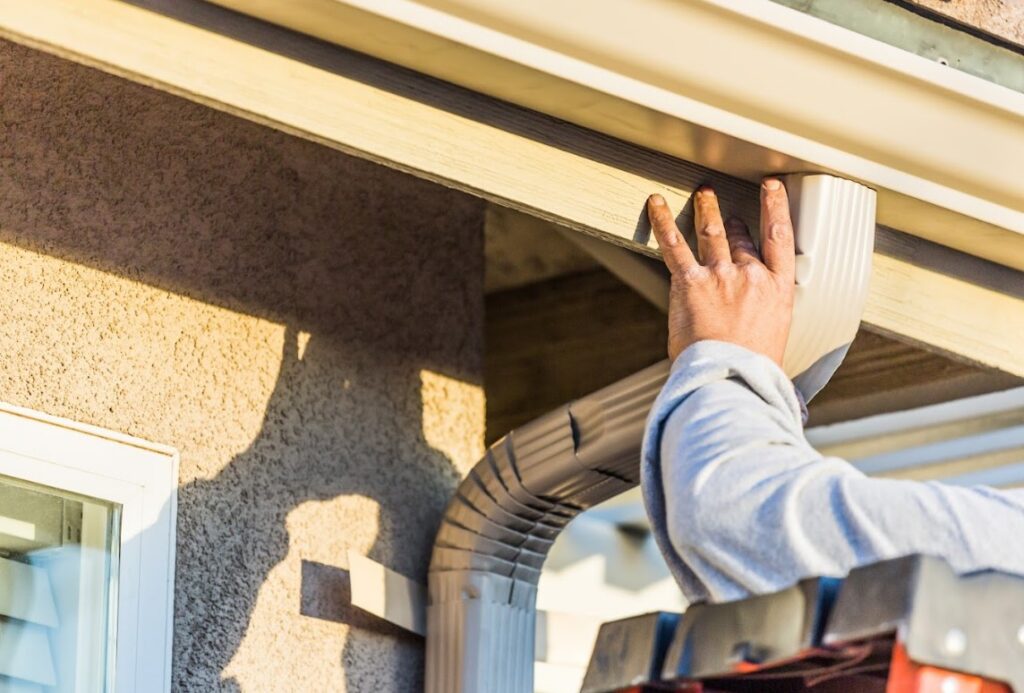
4. Examine Gutters and Drainage
Roof maintenance in the spring should always include checking the drainage system.
Look for:
- Sagging gutters
- Loose fasteners
- Downspouts pulling away
- Shingle granules accumulating in troughs
Proper drainage supports the entire roofing system.
5. Check the Attic for Interior Signs
Some of the most important clues are inside.
After storm season, look for:
- Water stains on decking
- Damp insulation
- Darkened nail tips
- Musty odors
Attic inspections often reveal slow leaks long before they show up in living spaces.
6. Consider Roof Age in Context of Storm Exposure
In Huntsville, asphalt roofs often last 15 to 20 years due to repeated wind and hail exposure. If your roof is approaching that range and showing signs of storm wear, spring is the right time to evaluate long-term options.
A roof inspection checklist is helpful, but age combined with storm history gives a fuller picture.
What a Professional Spring Roof Inspection Includes
A homeowner review is a good first step. A professional spring inspection goes further.
During a formal roof inspection, we evaluate:
- Shingle condition and fastening patterns
- Evidence of hail bruising beneath the surface
- Flashing integrity under shingles
- Ventilation performance
- Signs of improper installation
Many roofing issues in Huntsville stem from incorrect nail placement that does not meet Alabama building code. That type of problem may not be visible without a trained evaluation.
After the inspection, we explain findings clearly. If a roof repair is appropriate, we show why. If roof rejuvenation makes sense, we discuss it. If roof replacement is the responsible option, we explain the reasoning.
The goal is clarity, not pressure.
Spring Roof Maintenance and Material Performance
Different roofing materials respond differently to storm season. A proper spring roof inspection takes those differences into account. What you look for on an asphalt roof is not always the same as what you look for on a metal system.
Here is a side-by-side overview to guide your roof inspection checklist.
Asphalt vs. Metal: What to Look for After Storm Season
| Inspection Focus | Asphalt Shingles | Metal Roofing |
| Most Common Storm Issue | Hail bruising and wind-lifted shingles | Fastener loosening and panel movement |
| Surface Damage Signs | Granule loss, dark impact spots, curling edges | Dents, oil-canning, scratched coating |
| Wind Vulnerability | Seal strip failure and improper nail placement | Exposed fastener back-out or flashing lift |
| Spring Inspection Priority | Seal strip performance, granule retention, fastening pattern | Fastener tightness, panel alignment, sealant condition |
| Lifespan Impact if Ignored | Accelerated aging and leak risk | Water intrusion at fasteners or seams |
This comparison helps homeowners understand why spring roof maintenance is not one-size-fits-all.
Asphalt Shingles
Asphalt shingles are the most common roofing material in Huntsville. They perform well when installed properly, but they are more vulnerable to hail impact and wind uplift than metal systems.
During a spring roof inspection, we confirm:
- Seal strip performance after wind exposure
- Granule retention following hail
- Proper fastening according to Alabama building code
Improper nail placement is one of the most common issues we see after storm season. When shingles are installed correctly and ventilation is balanced, they hold up far better in severe weather.
Metal Roofing
Metal roofing handles wind well and often resists the kind of seal-strip failures common in shingles. However, it still requires inspection after storm season.
A spring inspection focuses on:
- Fastener tightness
- Panel alignment
- Sealant integrity around penetrations
Exposed fastener systems, in particular, need routine review. Temperature swings and vibration can loosen screws over time. If ignored, minor movement can lead to leaks.
Even durable materials benefit from routine spring roof maintenance. Storm roof damage does not always mean dramatic failure. Often, it shows up as small shifts that need correction before the next season arrives.
After reviewing material performance, the real question becomes whether the roof needs repair, replacement, or simply maintenance.
Repair, Replacement, or Rejuvenation After Storm Season
Not every roof needs replacement. Some need minor repair. Others may qualify for rejuvenation. The key is matching the solution to the condition of the roof after storm season.
Is Spring the Right Time for Roof Rejuvenation?
Spring is often the ideal time for roof rejuvenation because temperatures support proper product absorption and performance.
A spring roof inspection determines whether the roof is a candidate. Rejuvenation works best when shingles are aging but free from significant storm roof damage such as hail bruising or wind-lifted tabs. If structural issues are present, repair or replacement is the more responsible choice.
Spring Roof Inspection FAQs in Huntsville: What Homeowners Ask After Storm Season
After reviewing what to look for on your roof this spring, most homeowners want practical clarity. These are the most common questions we hear during spring roof inspections in Huntsville, especially after wind and hail storms.
How often should I schedule a spring roof inspection in Huntsville?
You should schedule a spring roof inspection once a year and after significant wind or hail events. In Huntsville, recurring storm activity makes annual inspections an important part of responsible roof maintenance. Post-storm evaluations help identify hidden storm roof damage before it becomes a leak.
What are the most common signs of storm roof damage?
The most common signs of storm roof damage are lifted shingles, hail bruising, and granule loss. Wind often weakens seal strips, while hail damages the protective surface of asphalt shingles. These issues may not be obvious from the ground but can shorten roof lifespan if left unaddressed.
Can minor hail damage really affect roof performance?
Yes, minor hail damage can affect roof performance over time. Even small impact bruises weaken the asphalt layer beneath the surface. That structural weakening increases the risk of cracking, water intrusion, and early aging.
What does a professional roof inspection checklist include?
A professional roof inspection checklist includes shingle condition, fastening patterns, flashing integrity, ventilation review, and attic evaluation. The goal is to assess both visible and hidden damage caused by storm exposure. Documentation is provided so homeowners understand exactly what was found.
How long does a spring roof inspection take?
A spring roof inspection typically takes 45 minutes to one hour. The timeframe depends on roof size and complexity. The focus is on thorough evaluation, not rushing the process.
Should I wait until I see a leak to schedule an inspection?
No, you should not wait for a leak to schedule an inspection. Spring roof maintenance is designed to prevent interior damage before it occurs. Once water reaches the ceiling, the repair scope is often larger and more costly.
Will I receive documentation for insurance purposes?
Yes, you will receive photo documentation if storm roof damage is identified. Clear documentation supports informed decision-making and can assist if you choose to contact your insurance carrier. Early documentation is especially helpful after hail events in Huntsville.
Bringing It All Together
Spring roof inspections are about understanding what storm season left behind.
A thoughtful roof inspection checklist helps you identify visible warning signs. Professional evaluation confirms whether there is deeper storm roof damage that needs attention.
In Huntsville, where wind and hail are common, spring roof maintenance is part of responsible homeownership. It protects your investment and helps you plan ahead instead of reacting later.
At Agape Roofing LLC, we approach inspections with experience, honesty, and clear communication. If you would like a straightforward assessment of your roof after storm season, schedule an inspection. We will walk you through what we find and help you decide what makes sense next.